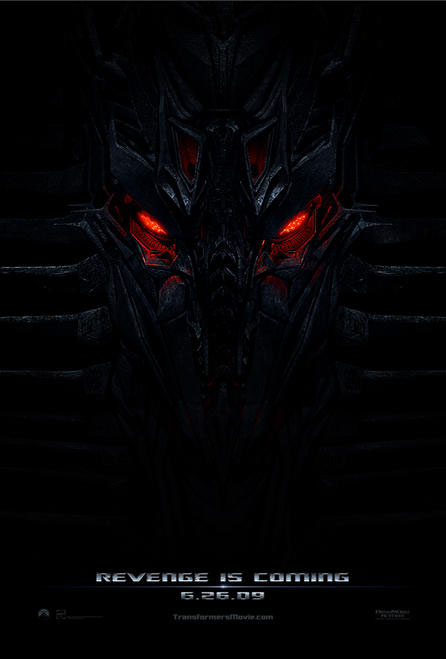
So I've been seeing a bunch of movies recently, and now I'm spending the next day or so sitting at home due to my impending root canal operation. I had a failed attempt at the operation this morning, and I've been sitting at home without feeling the left side of my face ever since. I'm finishing up a documentary on Arnold Schwarzenegger and his campaign to become governor of California, and then I'm going to go rent Robocop, and maybe Spaced, Simon Pegg's TV series, and potentially a few Woody Allen movies, like Deconstructing Harry. Oh, and maybe Time Crimes too!
In any case, while I'm not doing much I figure that I'll write a few responses and keep the review ball rolling. Transformers 2 and Moon got me started, and so I want to talk about what I'm watching and also a few things I've seen recently that I have yet to talk about in any formal way.

To start off, I want to discuss Up. Kat and I saw it a while back with Morgon and Nick and Katrina and co., and so far I think it was probably the best movie I've seen in 2009. Of all the bigwigs over at Pixar, Pete Docter has always interested me the least. I've never been huge on the Toy Story movies, and I felt Monsters Inc. was boring and failed to draw me in emotionally. In general I always found Pixar movies to be interesting but generally not my thing, with the slight exception of The Incredibles.
That was until I saw WALL-E.
That movie changed everything, and completely sold me on the company and their films. It ended up being one of my top four films of 2008, along with The Dark Knight, Funny Games, and Rip: A Remix Manifesto, strange company for a Pixar film but certainly evident of my esteem for the story of the near-speechless little robot that could. The range of emotions Andrew Stanton and John Lasseter et al were able to evoke using a pair of binoculars attached to a box with wheels amazes me still. The film was actually stronger in the opening 45 minutes when there is no dialogue, particularly when WALL-E takes care of the in-stasis EVE and when he flies through space hanging onto her transport vehicle. The film reaches these heights again later on when it again returns to emotions instead of dialogue, showing us EVE's reaction to the video playback from her time in stasis, and her desperate efforts to revive WALL-E at the finale. In these sequences, and in general, the film tapped into something profoundly human through the story of two robots with the capacity for emotion.
As much as I loved WALL-E, I have to admit that Up does all of that even better in its first fifteen minutes alone.
The opening montage of Carl and Ellie Fredrickson meeting, falling in love, getting married, and living an entire life together is at once uplifting, inspiring, and crushing, and it brings tears to your eyes via the entire spectrum of empathetic sentiments. It's also completely devoid of dialogue. It lets the audience experience Carl's entire life with Ellie, and then grounds us in the time after her death when the story really begins. It's some of the most powerful film making I've ever seen, and following it we are shown an incredible adventure story that is effectively tied to the opening sequence such that it's poignancy elevates the entire narrative.
The first ten minutes are almost a film in their own right, expressing a story about life that is at once celebratory and aware of the harshness of reality. By extending the emotional arc of this sequence into the movie as a whole, Pixar enables us to really care about Carl, know him intimately without ever really hearing him speak, and in that way let us share his learning experience. It's almost like a really great sequel, but to the beginning of the movie.
There's also the curious interplay between reality and fantasy within the film. The story of an old man flying his house to South America via balloons is certainly rooted in the fantastic, but before we see this the film firmly roots its narrative in reality. Carl's life as the true story of the film begins is semi-tragic, his enthusiasm for life dead and gone along with the woman of his dreams, his late wife, Ellie. We are literally beaten over the head with this harsh reality as Carl, in a moment of blind, human frustration, hits a man with his cane and draws blood. In a Pixar film. It's almost uncanny to see on the screen, and it assures us, along with the subsequent legal proceedings, that we are watching a film in which the often unfair nature of reality is at play.
Then he takes off with his balloon-lifted house to a Conan Doyle-esque lost world inhabited by talking dogs, nigh sentient birds, and a crazed explorer who is remarkably spry for someone certainly pushing 80 or 90.
The contrast is effective because the film is, at its core, about the human experience, which itself is both fantastic and tragic simultaneously. Carl's adventure shows us that anything is possible, but the circumstances surrounding it remind us of the permanence of time and age, as well as the cruel side of love. The lessons Carl learns while trying to save a female bird named Kevin and a father-less boyscout are applicable to us all, just as the morals in the best of fairy tales transcend their circumstances. This could largely be said of most Pixar films, and indeed most films, but the maturity with which Carl's story is treated, and with which the audience is treated by having it told so unabashedly, make Up something more.
WALL-E is a film that I will buy when I finally get a Blu-Ray player, and I will enjoy its poignancy, beauty, and charm for years to come. I love its story, I love its constant and reverent nods to the sci-fi genre, and it will always hold a special place in my heart. But Up is without a doubt the best film Pixar has ever produced. It's a true fairytale, and a film that I will show my children (god I feel old typing that) in the hopes that it will encourage in them both good moral sense and an apreciation of film.
Alright, so that's a bit of a rant off my back. Been meaning to get around to that for a while now. As I said earlier, I'm spending a few days just sitting and watching movies, so I'm off to start that. First up is Robocop. Can't believe I've never seen that. Afterwards I have Crimes and Misdemeanors (Jo's recommendation), Before Sunset, and Spirited Away. Should be a good day or two, despite the tooth surgery and pain.