Showing posts with label gender. Show all posts

Monday, April 8, 2013

Reposts: Rock, Paper, Shotgun on Misogyny and Video Games


John Walker over at Rock, Paper, Shotgun -- an outlet I don't read but am constantly hearing good things about -- has written a great piece about combatting misogyny in video games. The website has taken a strong stance speaking out against sexism in games and the gaming industry, and in this latest piece Walker outlines why fighting these issues matters as well as his personal thoughts.

It's his last bit, though, that really struck a chord with me: at the end of the article he outlines a few typical responses in discussions of this subject, and then specifically identifies why they're wrong and unproductive. I'm going to share the section in full because it's a pretty awesome and succinct take-down of some of the most irritatingly obtuse contributions to serious discussions of gender and video games, and it would save the collective populace a lot of energy and grief if more people would take these things to heart. All of these concepts can also be extrapolated outside the video gaming context, and I appreciate any attempts to improve conversations broadly. It's a bit like the Ill Doctrine video that I mentioned last month about how to have serious conversations about race and racism. Anyway, without further ado, here are a few ways you shouldn't respond to discussions of gender and video games, and why not:


“Why are you writing about feminism on a GAMING site?”

This question, like so many objecting to any discussion of the lack of equality in the industry, betrays itself immediately. When a publisher issues financial results and we report on them, we don’t see, “Why are you writing about economics on a GAMING site?” When there’s discussion of the effects of violence on players, we don’t read, “Why are you writing about sociology on a GAMING site?” It’s only when the gaming-related subject is the portrayal or treatment of women do such people become enraged by any post that isn’t literally describing the content of a particular videogame.

And to answer the question: because it’s relevant, and it matters. 50% of gamers are women, and around 20% of “hardcore” gamers are women. While the majority of RPS’s readers are men, that’s not something we’re proud of. (Many gaming sites strive for this, as it performs well with advertisers. We would prefer breadth.) We write for a global audience, and we aim not to presume whom our reader might be. We know that matters affecting women affect our audience, whatever their sex, and we know they affect the games industry we cover. We believe in equality, and when we are aware of inequality in the industry upon which we report, it is relevant for us to cover, and we believe important to highlight.


“What happened to this site? You used to write about GAMES.”

This is obviously one of the more strange responses, yet certainly among the most prolific. At least 95% of the posts on RPS are directly about games themselves, as is obvious to anyone looking at it. Posts related to matters regarding women make up the tiniest percentage of our output, and it’s obviously nonsense to make the claim above.


“You’re just trying to be a white knight/get laid.”

...

This particular response is designed to undermine the writer, not only suggesting that caring about equality is something inherently driven by a desire for sex/validation, but that the very idea of caring at all is so unrealistic. Either the accuser cannot conceive of the notion of caring about another’s rights independently of one’s own gratification, or they are so fearful of the potential of equality that they’re driven to undermine those who argue for it. Either way, if you’re typing the words “white knight”, you’re revealing more about your own peculiar understanding of how humans interact than anything else.


“Why don’t you talk about men’s issues?”

First of all, the question presumes the peculiar notion that writing about women’s issues precludes our writing about men’s. That’s obviously ridiculous. And secondly, sadly the question is generally used dishonestly.

There are issues that affect men, and often men who are the target demographic of gaming. Suicide is an especially serious example, and it’s something RPS has covered, and expressed concern over. Our caring about equality in the games industry, and in the portrayal of women, does not exclude our caring about matters affecting men. Obviously.

However, the question is generally designed to derail. It’s often as relevant as asking, “Why don’t you talk about digital download re-sales?” at the end of an article about the troubles of pre-ordering. Sure, why don’t we? Good thing to talk about. Not really a pertinent question in this instance. And that’s the idea – by asking this broad, presumptive question, the aim is to distort the discussion from the matter at hand, which in turn further leaves the matter at hand undiscussed. By the time you’re having tiresome arguments about whether male characters being shown as successful and strong is harmful to men, you’re no longer discussing the fact that scantily clad women are being used to sell videogames. That’s the ultimate aim of the question.


“I know a girl who thinks X, so you are wrong.”

This angle is generally used to argue against anything that is said to misrepresent women, or to represent women in a bad way. This known girl, fictional or real, likes it, so why does anyone have a problem? The argument oddly presumes that a matter is only of concern if women are exclusively and unanimously against it. Men’s views are irrelevant, and indeed all other views are irrelevant, because there’s this one girl who thinks… This is about as useful an argument as someone’s claiming homoeopathy works, against all abundant evidence, because their mum’s knee felt better.


“People are exaggerating on both sides.”

This, and many variants on it, are all about pretending to want to bring “balance” to the argument, in order to prevent its taking place at all. It’s dishonest, based on unexplained, undefined notions of exaggeration, perhaps if pressed illustrated by a single example that likely only emphasises the faux-diffuser’s prejudice. As and when people exaggerate in any debate, it’s great to call people out on it. People called out the issues in a recent post I put on RPS about gender wage gaps, which one could describe as exaggeration. That’s a good thing to do. It, however, has no bearing on the facts that there are problems that need to be dealt with, and the line is usually employed when trying to ensure nothing is allowed to change.


“It’s just a bit of fun.”

When I undermine you in front of your boss, lie about you behind your back, and play cruel tricks on you, it’s just a bit of fun! Oh, wait, those things aren’t fun because they’re happening to you? Gosh, imagine if such a perspective were available when other things that other people don’t like are happening to them? But no, it’s just a bit of fun, then. They should just get over it.

- - -
'Reposts' are inspired by other articles or blog posts around the Internet. They are used here with accreditation as the basis for short bursts of Max's interests.

Friday, April 5, 2013

A Dramatic Reading of Sexist YouTube Comments

The following video comes in response to that heartwarming story about a dude who hacked the original Donkey Kong arcade game to let his daughter play the game as a girl. Apparently some people took issue with the hack:


I'm torn about this video. On the one hand, it's a visceral reminder of how much people suck. On the other hand, if people are going to be shitty on the Internet then at least we can get funny videos to slightly sweeten the deal. It's a "spoonful of sugar" type deal, because laughing at people for being stupid is more fun than getting angry. Or at least the laughter helps with the anger.

Wednesday, March 13, 2013

MovieBob on Tropes vs Women in Video Games

I've spent more hours than I care to admit over the last few days fighting with people on reddit about the Tropes vs Women in Video Games series. I know, I know, it's fighting on the Internet (and reddit specifically) but I just couldn't help myself after reading so many arguments that a) Anita Sarkeesian thinks video games are evil, b) Sarkeesian is a shitty journalist and that's what the backlash against her was about, c) it doesn't matter that the damsel in distress trope reduces women to objects because it's just a simple storytelling device, or d) in fact the trope also objectifies the male hero figure so lets talk about that.

Ugh!

Anyway, after putting so much energy into fighting about shitty responses to Tropes vs Women in Video Games, the prospect of a video on the subject by MovieBob filled me with palpable fear. I really, really like MovieBob. I think he's a great, witty commenter who puts out a prolific amount of amazing content. I do not agree with all of his opinions, both on culture and politics, but generally I enjoy his perspective and look forward to his videos. However, when I saw that he had put out a ten minute long video on Tropes vs Women I was nervous. A few days of fighting about it on reddit had more or les conditioned me to assume that any video on the subject would be frustrating and infuriating, and I wasn't sure if I could take that from someone I admire as much as MovieBob.

Thankfully, my gut reaction was completely misguided. It's like I forgot who MovieBob is, as he's repeatedly demonstrated that he has a solid understanding of gender politics. His video is a great addition to the debate going on right now, and more or less just calls out all the trolls who have been/still are freaking out over this. It's a solid video that does a better job at identifying exactly what Anita Sarkeesian is doing with her videos than anything else I've seen lately. Check it out, enjoy, and if you end up back on his The Game Overthinker website avoid checking out the comments, because man are they ever depressing.


Friday, March 8, 2013

Tropes vs Women in Video Games: Damsel in Distress Part 1

The first video in Anita Sarkeesian's Tropes vs Women in Video Games series has been released, and can be viewed below. It's the first part of a discussion of the gaming-incarnation of the "damsel in distress" trope, and is a fascinating watch. This entry effectively canvases the use of the trope in the Zelda and Mario series, as well as the transformation of Rare's Dinosaur Planet into Starfox Adventures. Check it out, it's worth your 25 minutes!


In case you weren't aware of the Tropes vs Women in Video Games series before checking out this video, you should know that the newly-launched series has already been the subject of much controversy (all of which kinda makes a good case for the series' existence). Sarkeesian has been making her Tropes vs Women videos for a while, but for the video games extension of the series she turned to Kickstarter to get funding from fans. For reasons that (frankly) allude elude me, this was seen as some sort of irredeemable transgression on her part, and attracted the collective hatred of misogynistic gamers from the depths of the Internet. Slate's Amanda Marcotte sums it up nicely:
Sarkeesian's story is a doozy, by the way. She started a Kickstarter page to raise money to make a documentary about the tropes used by video game designers to portray female characters. She hadn't expressed an opinion about video games yet, but simply by stating that she would at some point in the future do so, she had to endure an absolute avalanche of misogynist abuse from men who hoped they could silence her before her too-scary-to-be-heard opinion could be voiced. Every access point they could exploit was used to try to get to her, especially her YouTube page. Her Wikipedia page was repeatedly vandalized with lies, links out to porn sites, and pornographic pictures. Eventually, Wikipedia shut it down.
Wow. Sarkeesian asked for a paltry $6,000 from fans to make a series about videos games and the roles of women within them, and just for that she was viciously attacked. Helen Lewis at the New Statesman canvases the harassment and intimidation tactics Sarkeesian was subjected to, and it's a pretty harrowing read. Thankfully the story at least has a happy turn in that Sarkeesian was able to raise over $150,000, and will be putting out follow ups to the video above.

So now we have a solid video series examining gaming with a critical lens that is sorely needed. We also have a moment of shame in the gaming community that can be pointed to as evidence that there is something tangibly wrong with the way (many) gamers think about gender and deal with other people. I'm at a bit of a loss trying to conceive of how anyone thought it would be reasonable to harass anyone the way Sarkeesian was harassed, much less for the mere prospect of having an opinion, but clearly that was the case for a great many people out there. Again, this kind of thinking within the gaming community is precisely the reason why we need these kinds of videos, as the only way to make any sorts of changes to these phenomena is discussion and education.

Wednesday, December 5, 2012

Repost: Why are women scared to call themselves feminists?


Salon recently ran an article asking "Why are women scared to call themselves feminists?" If you'd asked me a few years ago whether I thought "Why are women afraid to identify as feminists?" was an important conversation to have, I would have called you crazy. Completely immersed in university culture, most of the people I associated with were openly (and actively) feminists. It got to the point where I mentally resituated feminism to the default politics I assumed in people. After all, who doesn't believe in female equality? If someone legitimately didn't then I would find that surprising and repugnant, and that became something I actively did not expect in people.

But things don't stay the way they are in undergrad. A few years out, I've had more conversations than I care to recall that pretty much go something like this:
Them: "No, I'm not a feminist."
Me: "Oh? Why not? Do you believe in gender equality?"
Them: "Yes, of cours, but feminism just... I don't know, it just seems like something for lesbians."
Me: ...

Yep. I shit you not, that's a conversation I've been a part of. More than once. I'm now at the point where, upon seeing Salon's headline pop up on my newsfeed, I immediately thought, "That is a damn good message that more people should be exposed to!" Hence this repost.

It's not that people don't believe in equality for women, generally I've found that most people still believe in that (or at least claim to). What I've found startling in recent years is the sheer number of people I've met, men and women alike, who claim not to be feminists as though that identifier is a dirty word. I've had numerous conversations with people who actively don't want to be associated with feminism because they see it as some sort of radical ideology. Sure, there are radical feminists, just like there are radical anythings. Radical liberals, radical atheists, radical [insert noun]. That doesn't mean that the underlying assumption of feminism is inherently associated with such radicalism. More than that, I still believe it should be shocking for someone in this day and age to say they are not a feminist given that doing so equates to not believing in gender equality. Is that really a message that is still mainstream acceptable in any way?

I think the major issue is that people don't understand the difference between feminism and the abstract notion of radical politics, and that's a very serious problem. I'm certain there are very good arguments that such misunderstandings are the result of misogynist attempts to undermine the goals of feminism, and while I don't think it's my place to make those arguments, I will say that if people (women or men) in positions of power continue to say that they are not feminists then that is straight up evidence of and a victory for the patriarchy. It literally means you don't believe in gender equality, and when people say it what I think they're actually trying to convey is that they want to be successful so they don't want to be associated with a political ideology that has been cast as radical and therefore repugnant. Is gender equality a radical notion? That's for you to decide, me I'm a feminist so I'll let you guess what I think.

I'll leave you with what I think is the best paragraph from the article, it really hits the nail on the head:
Let me just point out that if you believe in the strength of women, Ms. Perry, or their equality, Ms. Mayer, you’re soaking in feminism. If you’re like Ms. Bruni-Sarkozy and want to explain that “I imagine I am if feminism means claiming one’s freedom. But I am not if it means being committed in an active way to the fight that some women are still leading today I admire their bravery a lot, but I have chosen to commit myself elsewhere,” you should know that “the fight” is just being an autonomous person in the world. And if you’re like Ms. Fenton and think feminism means being treated like “anyone else,” remember that there aren’t a whole lot of “anyone else” options out there. You’re basically admitting that masculinity is the norm and that all we can do is aspire toward some kind of equitable footing in a man’s world. This sounds like a job for … feminism!
- - -
'Reposts' are inspired by other articles or blog posts around the Internet. They are used here with accreditation as the basis for short bursts of Max's interests.

Friday, November 30, 2012

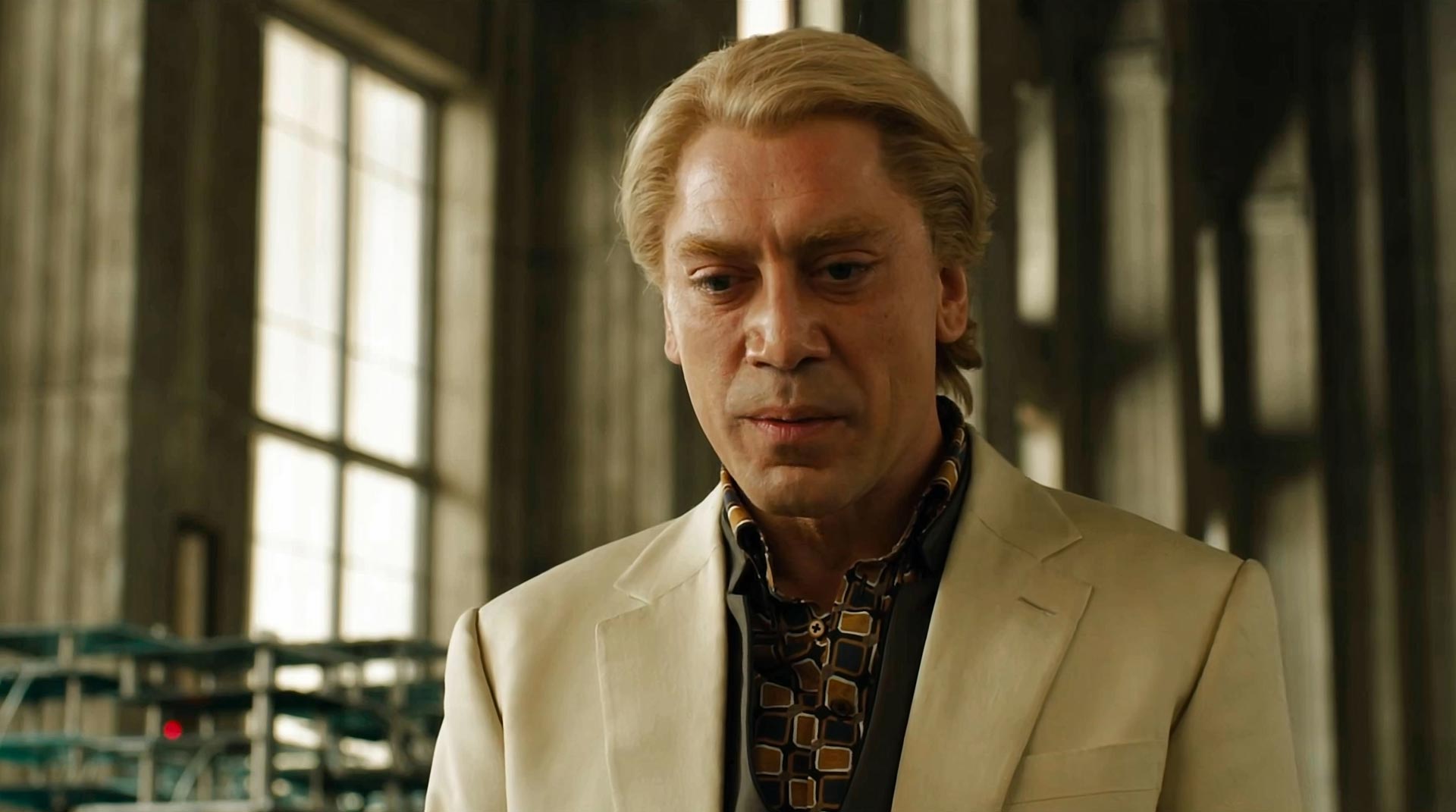
Reality Check: The Darker Sides of Skyfall


Spoiler Warning: This post contains significant spoilers for Skyfall. Please do yourself a favour and see the movie before you read any further to avoid being spoiled.

It's been a little while since my glowing review of Skyfall and I've had a bit more time to ruminate on the film. I stand by my claims that it's among the best Bond movies ever made as well as one of the best films of 2012. In fact I'd go so far as to say it's the most beautifully shot film of 2012 and worthy of praise on "Best Cinematography" lists for years to come. Roger Deakins truly outdid himself with Skyfall and movie lovers would do well to see it strictly for the camera work in the third act, with the rest of the legitimately awesome aspects of the film serving as mere silver-lining.

However, all that said, I do want to add to my review by recognizing some of Skyfall's flaws. None of these were issues that escaped me when I wrote my review, but in trying to avoid spoilers I necessarily had to eschew delving into many of them. Also I wanted that piece to convey my overall sense of satisfaction with the film, and nitpicking it to death wouldn't have helped me do so. Finally, the most damning critique I'm going to level against Skyfall was something that simply took some gestation time to really come together. It began with a sense of unease as the final scene of the film played out, and has evolved to a serious concern that exists at odds with my overall affection for the film.


I'm going to start with my more mundane criticisms of Skyfall, as I feel there are a lot of problems with the movie that don't really detract from what it's trying to do. For one thing the third act -- which I have repeatedly praised -- feels more than a little out of place. It completely disrupts the flow of the movie and more or less shelves a good proportion of the plot, never to be heard from again. What happened with the chaos Javier Bardem had unleashed on western covert operatives, and specifically the British government? Are we to believe that his plan included letting MI6 capture all of his actual computer records/servers such that he had no additional copies of the list of undercover agent identities? All of that is secondary to Skyfall's focus on thematic structure, but the fact that the film left those holes open speaks ill of its script. It feels like the movie expects us to forgive it for this, either because it's a James Bond movie or because the third act so effectively forefronts the themes as plot, and while all that's true it still feels like the whole thing could have been tightened up a bit.

Specifically focusing on the third act, it more than just disrupts the plot, rather it's a whole other freakin' movie. Where everything before they head to Scotland is distinctly Bond, the sequence at Skyfall feels like the bastard child of Home Alone and the last scene in Unforgiven played in reverse. It's just plain weird to try to watch James Bond make lightbulb-bombs and load shotgun shells into the floorboards, but that doesn't mean it isn't awesome all the while. I absolutely loved the whole sequence; one friend put it perfectly when they said "This is what happens when you let Sam Mendes make a Bond movie," and it's true that everything in Scotland feel like something straight out of Road to Perdition. It's awesome but it felt distinctly out of place in the context of everything that precedes it. Obviously I wasn't bothered, but I think it's a legitimate concern to wish they had tightened up the script to feel more cohesive and consistent. Again this is an issue with Skyfall's script as opposed to its execution, and I feel like the way the whole movie played out on screen more than made up for such deficiencies.

On the other side of that spectrum we have Albert Finney's character, who stands out like a sore thumb in terms of Skyfall's execution. If that old scotsman wasn't meant to be played by Sean Connery then I have no business writing film criticism. Even during my first viewing I could just feel that the character was a stand-in for Connery as the physical embodiment of the old Bond, and that idea is frankly awesome. If the casting had worked out it would have made the whole Skyfall sequence feel so perfect and thematically in tune, although I think they did a damn good job of it despite the obvious lack of the original James Bond. Part of me did wish they'd found a way to handle it better though, at the very least to make up for the casting failure. I never, never want to see Roger Moore again (on film or otherwise) but even he could have made the character work better. As it was Finney was totally competent but uncomfortably out of place in a role that he was clearly not meant to play.


Moving away from criticisms of the third act, I've heard a lot of comparisons between Skyfall and the Dark Knight. I can see why people would compare the two as the plot similarities are undeniable. Bardem's villain also has extremely similar objectives, and on a superficial level he even has a twisted Joker-smile of sorts. In fact I was almost taken out of the movie when I realized that the big twist in Bardem's plan was exactly the same as Joker's in The Dark Knight. It's a testament to Skyfall's overall quality that this aping of The Dark Knight's plot didn't completely derail the movie; between Bardem's cool creepiness, the third act standoff, all the Bond franchise flourishes, as well as Deakins' aforementioned superb cinematography, Skyfall manages to carve out its own identity and even surpasses The Dark Knight in certain ways. Both are great movies, but the similarities are hard to ignore and do take away from Skyfall a bit.

*Sigh* And now it's time to get to my real problem with Skyfall, the big misogynist elephant in the corner that has slowly been sapping my enthusiasm about the latest Bond movie. I felt it in the theatre as I watched Bond walk through the leather door and up to the desk of a male M, the first time I'd seen such a sight in a new Bond movie. At the time I just shrugged it off, but upon further reflection and after a number of discussions with friends I feel it's impossible to ignore the sense that Skyfall feels like a major step backwards in terms of its sexual politics, even for a Bond movie. But lets work through that statement by inspecting each of the three main female characters in the movie: Sévérine, Eve, and Judi Dench's M.


First off, lets address the seriously problematic character of Sévérine. You probably know her better as "that hot asian chick Bond bangs," since she's barely given anything resembling a character before being carelessly executed without even a moment of reflection. In fact, shy of her physical characteristics, the closest thing we get to a characterization of her is that she's afraid and a (possibly former) sex slave. I don't know if the filmmakers threw in that last reference to make us sympathize with her or to hint at their ultimate treatment of the character, but pretty much her only roles in the film are to movie the plot forward and get naked. It can't be stressed enough that Bond's ultra-creepy sneak-up-on-her-in-the-shower-for-surprise-sex move is not acceptable, and is hopefully among the traditional vestiges of the past that are thematically shrugged-off over the course of Skyfall. The problem is that there's nothing to justify such a reading within the film, and in fact it seems like the opposite is true. Bond's "return-to-form" moment comes after Bardem executes Sévérine, a move which poises her as an object.tool of his evolution/development at the script level. There is a potential argument that Bond couldn't express remorse while under fire, and that in fact his transformation back into a competent agent comes as a result of Sévérine's death impacting him severely and thereby telegraphing his need to "be Bond" again. However I don't think there's much justification for this in Skyfall, and on the contrary it does seem like the movie uses her as a traditional Bond girl/narrative device/sex slave. So that sucks, to start with.


Now lets consider Naomie Harris' "Eve," AKA Moneypenny. I love Harris in everything she does, and I both saw the Moneypenny reveal coming a mile away and loved the fact that they chose such a competent actor for the role. But that said, the mind reels at the sexual political implications of her turn from field agent to secretary. As Eve she initially seemed like a wonderful breath of a fresh air, a female agent at Bond's level who's totally fucking awesome to boot. But then her character is systematically undermined as an incompetent weakling over the course of the film, well-intentioned but better off as eye-candy behind a desk. The film went out of its way to make a callback to Casino Royale with the "don't touch your ear" show of incompetence, and the only purpose of this in Skyfall is to demonstrate how bad Eve is at being a field agent compared to Bond. On top of that there's the whole "she accidentally shoots England's best secret agent" thing. Clearly the filmmakers did not want us to have a lot of faith in her competence, for the exact purpose of making it seem rationale and acceptable that she doesn't want to be a field agent anymore. Of course that makes "common" sense, some people (i.e. women) just aren't suited for it, right James? I suppose all of this could be seen as conjecture, a feminist-oriented over reading of a Bond film to try to find a sexist undertone that isn't really there. Only they follow up that development with the reveal that she's taking a desk job as M's secretary. For fucking real? They literally chain her to a traditional gender role in a movie that's explicitly about updating the past to make it suited for and relevant in the present day. As I said, the mind reels at the implications, and it's a serious knock against the movie that it re-institutes the traditional gender dynamics that the Bond franchise has long been (rightly) critiqued for.

And that's without even beginning to touch upon the whole M thing.


I'll start by saying that Judi Dench is in characteristically badass form in Skyfall. There's nothing wrong with her or her character in any way that I've noticed/care to consider, and my only regret it that she's exited the franchise. Partly that's because I'm going to miss her as she's an absolute pleasure to watch onscreen, but it's also because I'm not totally comfortable with going back to a male M. As I mentioned in my initial review, Goldeneye was my introduction to the Bond franchise and so my knowledge of earlier Bond films/tropes has come via films that have always seemed (to me) like relics of the past. This includes the positively rampant misogyny of earlier Bond films, and part and parcel with that trend was the institutional structure of MI6 with Moneypenny as the sole female and secretary for Bernard Lee's male M [Aside: implicit in this entire argument is the fact that I don't believe for a second the contemporary Bond films have completely shed their misogynist roots. Also, I would love to see a Bond film that passed the Bechdel test, and if I've somehow missed that one already exists please let me know].

Skyfall presents the first time I've seen a male M in a new movie, and from that perspective the sight of Bond walking through the leather door into Ralph Fiennes' office felt like a step back into the literal and figurative past. I was (and continued to be) extremely conflicted about it: on the one hand I ate up the way the franchise's classic elements were re-instituted in Skyfall's final scene, bringing back the classic Bond in a viscerally satisfying way; on the other hand it felt like those elements brought back the old, unpleasant gender dynamic implications they always had. I'm not sure if this was more a result of how the movie brought back Moneypenny and a male M as much as it might be inherent in those concepts, but either way the end of Skyfall felt both like a return to form and a regression to problematic politics. I'll be curious to see how future Bond movies handle the reintroduced elements, as I could easily see Moneypenny being used less as a mere secretary and more as a sort of body guard, but that doesn't take away from the reduction of her role to one distinctively less than Bond and M as the more important men of MI6. As compared to Judi Dench's positively badass introduction in Goldeneye, which felt every bit like a defiant rejection of what had come before (particularly the "your predecessor kept some Cognac" exchange), Skyfall feels like reestablishment of the old guard. Finnes character and performance don't themselves do anything to add to this, but the cumulative impact of him replacing Dench after she's killed off, in addition to how Skyfall puts Moneypenny in the corner behind the desk, makes the film seem like a major step backwards in how the franchise treats women. It's even more surprising that Skyfall does this so potently given that it's a Bond movie, a designation that on its face seems synonymous with patriarchal gender hierarchies on film.

In updating the franchise for the modern day, Skyfall somehow manages to make it seem more out of place than ever in terms of its sexual politics. That's a notably unfortunate achievement that shouldn't be ignored in the face of how successful Skyfall nevertheless is as a film.

Anyway, that's my two cents on the problems with the film. I maintain that it's an incredible movie that stands among the best of 2012, and more than that one of the most beautiful movies I've ever seen. Period. I just wish it had done all that while maintaining a tighter script and (more fundamentally) without appearing to reinstitute the traditional gender dynamics that the Bond series seemed to have grown beyond (or at least partially ameliorated) during what we can unfortunately now refer to in the past tense as "the Dench years." Hopefully the next one will be able to at least match Skyfall and also gain back some ground on the progressive gender portrayal spectrum. All we know for sure is that "James Bond will return."

Thursday, March 15, 2012

Censored Doonesbury Cartoon on Women's Rights

Doonesbury cartoonist Gary Trudeau has come under fire this week for his set of strips mocking recent legal developments surrounding abortion and contraception in the United States. Specifically, the strips detail the trials of a young woman attempting to get an abortion in Texas. As The Guardian reports, some papers have refused to run the strips while others have relegated them to the editorial page.

The series is presented in its entirety below thanks to Media Watch, a blog run by SACOMSS.


I'm not going to write much about this, mostly because it's late and I'm tired right now, but also because Media Watch has already said everything I could possibly say on the issue. Briefly, this is not only a pretty depressing example of censorship, it's also (unusually) clearly indicative of the larger social and political problems behind the disputed abortion/contraception laws themselves. This isn't the first time Doonesbury has taken a controversial political stance, and likewise it's not the first time the strip has been censored. However, to my knowledge it is the first time that so many strips have been censored at the same time so as to completely stamp-out an issue. And it doesn't strike me as entirely coincidental that the political tipping point was a law about abortion/contraception, and more accurately about women's rights. Just don't take my lack of surprise as a sign of acceptance or apathy, it's more accurately a deeply rooted cynicism about how minorities are treated south of the border.

Anyway, it's late and I'm tired. The comic is above so give it a read.

(Via Media Watch via my friend Sam)

Thursday, January 5, 2012

Guest Post: Men Who Hate Women

I'm starting 2012 off a little differently here at MaxRambles by featuring my first ever guest post. Back in December I went to see David Fincher's The Girl With the Dragon Tattoo with my friend and fellow blogger Johanna. Based on the like-named 2005 novel by Stieg Larsson, TGWTDT shows an unusual pair of detectives investigating the murder of young Swedish girl over 30 years after the fact. In case you're not familiar with the source material, the story is primarily about sexual violence against women. The film features an extremely graphic rape scene that I've heard some say might be the most visceral depiction of sexual violence ever put on film. Either way it definitely deserves a trigger warning.

While I did know the scene was coming, Johanna did not and so was unprepared for the devastatingly brutal scene (for the record I would have warned her if I'd known she wasn't expecting it). Her piece below is a response to both the scene and the larger film from a feminist perspective. It's not my typical thing and I don't fully agree with some of the points Johanna makes, but that said I think she's largely spot on in her critique of TGWTDT and so I'm happy (and frankly a little flattered) to be featuring it here on MaxRambles.

I do want to warn you that Johanna's piece is very much a response to TGWTDT and as such is geared towards readers who have seen the film. It's brimming with spoilers and doesn't waste much time explaining things, but if you've seen the film you'll be just fine. If you enjoy the piece then please let us know in the comments, and if you want to read more of Johanna's writing you can follow this link to her contributions on JusticeBlawg.org (she writes under the shared name lawunion but always signs her posts). And now, without further ado...


Men Who Hate Women 

*spoiler warning, and trigger warning for sexual violence* 
I just went to see the recently released American film version of The Girl With the Dragon Tattoo. Having avoided the explosively popular books, and never having seen the Swedish films that were based on them, I knew nothing about the storyline and was completely unprepared for what happens in the film. David Fincher’s The Girl With the Dragon Tattoo contains the most explicit, brutal and devastating scene of sexual violence that I have ever seen. Technically I didn’t really see it, because it was unwatchable, but what I did see (and hear) is burned in my brain, and it was enough to have a full picture of exactly what was going on. After that I didn’t relax for the rest of the film and, two days later, I haven’t quite gotten out from under the cloud that it put over me. While that scene was particularly disturbing, it was not a thematic anomaly within the film. It is preceded by another sexual assault that I thought was bad enough, and is sandwiched within a story about missing and murdered women, victims of a misogynistic father-son serial killing (and raping) team. Needless to say, I wasn’t too surprised when I read that the English translation of the Swedish book’s original title is “Men Who Hate Women.” I guess the publisher figured that wouldn’t sell as well. 
The trouble that I’m having, and hope to work through a bit in writing this piece, is whether or not the graphic depictions of violence against women in the film are redeemable, in that they are both necessary and useful to a discussion of misogyny and rape culture, which the film seems to be interested in having. 
TGWTDT is, in my opinion, very clear about the power dynamic that is inherent in sexual assault and other forms of violence against women. Lisbeth Salander, the survivor of both of the scenes of sexual assault that I referred to above and, it is suggested, assault by her father during her childhood, is a ward of the state and prohibited from controlling her own finances. Early in the film she is assigned a new social worker, and very quickly he takes advantage of his position of power to coerce her into performing sexual acts in exchange for the money that she needs to live, and which she should be able to access freely. The first time this happens, she is forced to give him oral sex. The scene is stomach-churning, even more so when he states that her obvious reticence is a turn-on. However, it demonstrates a number of things. One is that any coerced sexual act is assault, regardless of whether or not it is physically forced. Sure, she could have turned and walked out of the office without acquiescing, but her situation was such that to do so would have meant total impoverishment and probably institutionalization. That is not a choice, and so she was sexually assaulted as certainly as if he had physically held her down and forced himself on her (which, unfortunately, is what happens later). It also shows that sexual assault is about power, not sex (although perpetrators of sexual assault clearly derive sexual pleasure from that power). After suffering further sexual violence from this man, Salander reveals that she recorded her rape and forces him to watch it. He appears to be visibly distressed by what he sees, which could be read simply as his panic about the situation that he is in generally, but I would prefer to think that it is the film’s way of showing that, as a sexual offender, he recognizes how disgusting his actions were when he sees what it really was: one person forcing himself upon another, physically weaker, incapacitated and unwilling person. While he may have felt powerful during that act, and taken sexual gratification from that feeling of power, forcing him to watch that recording dispelled the illusion. 
If by this point the audience had not understood that there is a connection between power relations and sexual assault, the film provides another opportunity when Daniel Craig’s character faces Martin Vanger, a serial rapist and murderer of women. He explains to Mikael (Craig) that he likes to watch the hope draining from the faces of his victims, and it is only when they have realized that they have no chance of escaping their fate that he becomes aroused. In other words, he is sexually aroused by the feeling of complete control and dominance over another party. That’s what it’s all about. So, all of this is to say that the film does a pretty good job of depicting and discussing sexual violence without sexualizing it. The rape scene is not titillating in the least; there are no lingering shots of Salander’s body, no romanticization or shying away from what is going on. It is very clearly violence, and for that I give the film some credit. Does that make it redeemable? After quite a bit of thought and a few discussions with some friends, my answer is no. 
One of the problems with the film is that while one of the main characters is experiencing all of this sexual violence, the other is becoming involved in an intriguing mystery, which becomes the central narrative thread. The assaults occur relatively early in the film, and are ostensibly used as a plot device, giving Salander a motive for helping Mikael “catch a killer of women.” The result is that instead of meditating on sexual assault as a systemic problem, it simply incorporates it as just another aspect of a story that is, ultimately, about entertaining the audience. This is the point that I had the most difficulty coming to terms with because if I believe that film is an important and relevant medium through which to discuss broad societal issues, which I vehemently do, how can I reconcile my feeling that there is something inherently exploitative or “problematic” about including so much explicit violence against women in this film? 
Here’s how: film absolutely can be used as a progressive tool to comment on and engage with issues like sexual assault, however in order to do so the film’s commitment must be to that discussion entirely, in contrast to TGWTDT, which is a mystery/thriller that happens to contain a bunch of sexual violence. In TGWTDT, the climax of the film, narratively speaking, is when Mikael is captured by Martin, and facing imminent torture and death. If this were a film about sexual assault, the film would have had to centre on the rape scene. For me, and for a number of others that I’ve spoken to, it did; I mostly shut down after that happened. However, others that I’ve spoken to didn’t seem to have been impacted by it in the same way at all. This applies predominantly to the (self-identified) men that I’ve spoken to about it, and I say that not because I think that men can’t understand sexual violence, or aren’t impacted by it, but because I think that the audience is encouraged to identify with Mikael, and that it is less likely that men will resist that identification. The result is that the sexual assaults fade into the background as the plot moves forward, with the audience getting the vague sense that they have somehow “dealt with” sexual assault as an issue because for a few minutes they were forced to engage with it, and to feel uncomfortable. 
There is a rich tradition within Hollywood of churning out liberal “issue films” (see Schindler’s List, Crash, etc.) that claim to make important statements about oppression, while actually just maintaining the audience’s complacency by leaving them with the self-satisfied sense that they now “understand racism.” I would argue that TGWTDT is operating in the same way with regard to sexual assault, and that is why I ultimately cannot forgive it for its violence. 
I think that there is a lot more to say about TGWTDT, in terms of Salander’s character more generally, which has been lauded as an exceptional depiction of feminism. I haven’t read the books so I can’t speak to how she is written, but based on the film alone I’m not convinced of this. She certainly has a great deal of agency, and is remarkably intelligent and independent, I give the writers that, but I was left feeling very conflicted about the scene in which she takes revenge on her social worker. She tattoos “I am a rapist pig” on his chest, and violently inserts a dildo into his rectum, which is unquestionably sexual violence in itself, and I cannot accept the message that sexual violence justifies further sexual violence. It is a scene of great catharsis, and it is very tempting to think, “Fuck yeah,” but that is precisely what makes me uncomfortable. I don’t want her actions in that scene to be associated with feminism, because that is not what feminism is to me. There may be an argument to be made on other bases for her as a strong, feminist character, I don’t discount the possibility, but I haven’t heard one yet. I also acknowledge that there are many other aspects of the film deserving of discussion, and as a thriller I think that it succeeds; but therein lies the problem, because there is nothing thrilling about rape. 
- Johanna

Thursday, October 6, 2011

Some thoughts on the "decline" of men


William J. Bennett's recent opinion piece on CNN.com, "Why men are in trouble," is an interesting read. The gist of the article seems to be that men aren't so obviously/distinctly the dominant sex anymore, and that's a bad thing. Today's "men" spend too much time playing video games, watching movies, listening to music, and generally enjoying an extended adolescence. We've lost sight of the values of marriage and religion and are out of touch with "Masculinity."


Even if we ignore the egregious problems with Bennett's basic premise, a cursory glance at his "evidence" shows a textbook example in how to skew statistics. He complains that "Women's earnings grew 44% in real dollars from 1970 to 2007, compared with 6% growth for men," as if this clearly demonstrates that men aren't upwardly mobile enough anymore. It's not like that stat (if it's accurate) could be a result of general societal trends leaning towards the correction of gross gender inequalities. Oh no! It's most certainly an indication that the new generation isn't manly enough to make sure it's earning more money than women. Bennett admits that "Men still maintain a majority of the highest paid and most powerful occupations," but warns that "women are catching them and will soon be passing them if this trend continues." Heaven forbid!


Speaking of which, apparently we men are also losing the piety contest: Bennett notes that only "39% of men reported attending church regularly in 2010, compared to 47% of women." Those uppity women-folk are starting to catch up with us here in the corporeal world, and if we don't man-up soon they'll have a stranglehold on the sweet hereafter as well! 


Moreover, Bennett says that if we don't believe his stats we should listen to the "many young women" he's apparently spoken with, all of whom are "asking, 'Where are the decent single men?'" I'd hazard a guess that such fabled 'good guys' are somewhere with the kinds of women who wouldn't give Bennett the time of day, but that's just me. It boggles the mind to think that Bennett took a few poor women's dating woes as evidence of the "tragic" decline of patriarchal values, yet that seems to be the implication.


But Bennett's all-star line-up of "evidence" doesn't stop there: he goes on to cite Hanna Rosin's "seminal article, 'The End of Men'" (which actually might be where he cribbed many of his stats). Rosin asserts that women are taking over traditionally male-dominated roles, and Bennett takes this as a sign of a multi-generational failure in masculinity. He (again) blames video games for distracting young men and disrupting their sense of what it means to be a man, and furthermore accuses their fathers of failing in their Platonic duty to raise "Men." In a clever move that I assume is meant as a subtle rejection of Bennett's argument, CNN.com has included a link in his piece to another article by Rosin entitled "Are women leaving men behind?" There she makes clear that her point is not "feminist gloating" but rather an empiric societal shift.
It's not any kind of value judgment. It just is. Women are in so many ways filling the roles that men traditionally filled ... I talk about the "end of men" not to make [men] feel hopeless and doomed to failure, but to open their eyes to the idea that gender roles are more fluid than ever, and that they do not have to fill some particular expectation. If you are prepared for it, then the end of a particular kind of macho can be a relief, not a curse.
Clearly Bennett sees the decline of traditional masculinity as a sign of the apocalypse, and to be honest that's not exactly surprising. He's an old white guy with a successful career behind him and so it makes perfect sense that he supports the "historical" dominance of the patriarchy. I'm making a wild generalization, granted, and I should clarify that I don't think that Bennett or all old white guys are horrifyingly sexist or anything like that. I'm just not surprised that Bennett's in support of traditional masculinity because it significantly informed the world in which he was able to become so successful. 


My real problem with the article is that it asserts that male dominance is over and explicitly says that's a bad thing. It's ludicrous to think that women have suddenly taken over and are now beating men in the gender war or somesuch nonsense. There continues to be widespread gender inequality in society (and I'm really only talking about North America here), especially when you start talking about career opportunities and professional earnings. Hell, the very fact that a major website like CNN.com is willing to host this kind of argument is itself a sign that traditional masculinity and patriarchal values are still deeply imbedded in our society. That's not meant as an individualized criticism of CNN.com (again I don't think they agree with Bennett). Rather the fact that it's worthy of posting (because he's a successful, influential person) is indicative of a larger framework of values.

Bennett cites some (assumably) valid statistics about how conditions are improving for women but takes them as signs that the very foundations of society are crumbling before our eyes. Implicit in that analysis are the beliefs that men should be in charge, that traditional male dominance over women is a good thing, and that the position and benefits men have enjoyed in the past are right. These are repugnant beliefs that I am not willing to accept, and Bennett takes them for granted, assuming them as natural principles. He doesn't even bother to make them explicit as ideology because he does not see them as such. That is among the many problems with his position, and with the larger value set that he is representing when he talks about what he believes it means to be a man.

Anyway, that's all the rant I have in me right now. Not sure if this had much of a point beyond calling out Bennett's argument as abhorrent. For the record, I'm not even sure why I bother getting angry about/critiquing this kind of nonsense. I suppose it's productive insofar as it's a mouthpiece for my personal politics, but beyond that... who knows? Feel free to let me know what you think in the comments.


(Via Kotaku, oddly enough)


(10/8/11: Minor gramatical edits because I'm sloppy sometimes)

Thursday, June 17, 2010

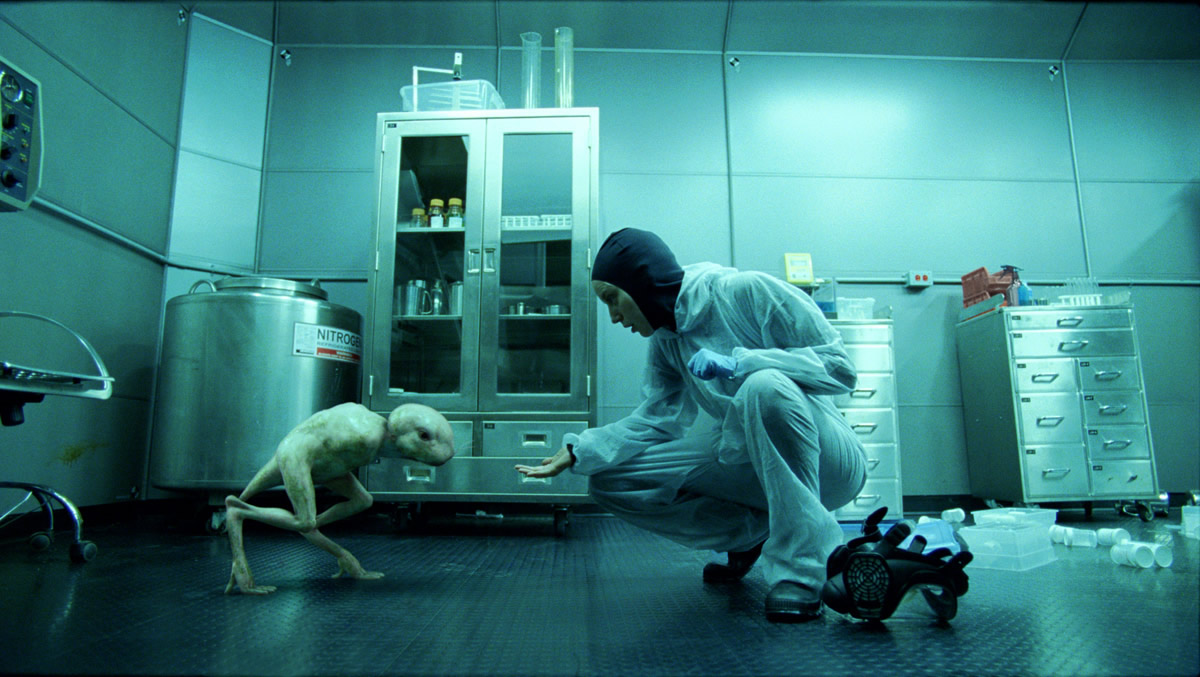
"Who doesn't want to be debased every now and again?" - Watching Splice


I wrote previously that I was looking forward to seeing Vincenzo Natali's Splice, but had some significant apprehensions about the film. I really enjoyed Natali's Cube and I'm curious about his upcoming adaptation of William Gibson's Neuromancer, but the marketing for Splice made me concerned it would take a frustratingly conservative stance on scientific experimentation. Having seen the movie I'm happy to report that those fears were completely unfounded, Splice was not a terrible, anti-science propaganda piece.

Instead it was just an astoundingly stupid and uncomfortable mess of a horror film.

Spoilers ahead.

Splice is ostensibly a sci-fi film, but I'm hesitant to call it that since the scientific aspects of the plot peter out about a third of the way through. The story is about two hot-shot geneticists (Adrien Brody's Clive and Sarah Polley's Elsa) who use a mixture of human and animal DNA to create a new life form they name Dren. Throughout the initial stages of their experiment the relative morality of human cloning is discussed, or at least mentioned in passing. One could argue that Splice effectively represents multiple sides on the issue by having Clive and Elsa debate it amongst themselves and with an evil corporate big-wig. Honestly though, the science and politics just aren't a real focus beyond their immediate roles in the plot. The movie is more about parenthood, if anything, and once Dren is born the focus becomes Clive and Elsa's relationship with it rather than cloning. That and creeping the fuck out of the audience.


Splice pointedly eschews rhyme or reason in a sustained effort to make the audience as uncomfortable as possible. There are numerous bizarre plot points with flimsy justifications at best. For example, Clive lets Dren curiously watch as he and Elsa have terrible, awkward sex. Apparently he's attracted to the creature because it's made using Elsa's DNA, or something? There’s also nothing in the way of character development or consistency. Elsa actually does a complete 180 personality-wise, changing from a strong, independent woman to a possessive crazy-mommy cliché. All of this results in an amorphous narrative in which the filmmakers depict weird, horrible things just to make the audience squirm. Clive decides he doesn't want to murder Dren anymore and sleeps with it instead. Sequences like this are ridiculous and don't make much sense but are extremely uncomfortable to watch, and that seems to be their primary goal.

So much of what happens in Splice is infuriatingly stupid and illogical, but it might actually be funny if the movie didn't take itself so damn seriously most of the time. The atmosphere is generally dour and tense but every now and again there are sudden winks at the camera that underscore how ludicrous the plot actually is. For example, after Clive gets caught having sex with Dren there's a priceless deadpan shot of Elsa running away from her deranged boyfriend. Such moments are clearly meant to amuse, but Splice is so generally insane that these sequences aren't always immediately discernible from ones that are just inherently ridiculous. It becomes hard to tell whether you're laughing with Splice or at it. The movie feels indecisively split between being truly horrific and comically absurd, and the result is a disconcerting viewing experience that invites far too much eye rolling.

Speaking of things that are irritating, I'd be remiss if I didn't mention Splice's convoluted and misogynistic gender politics. As I mentioned earlier, Elsa is introduced as a highly-intelligent, well-balanced person who is unapologetic in her resistance to conform to gender stereotypes. But as soon as she sees Dren she becomes an increasingly unhinged control-freak, and the switch is so sudden and all-encompassing that it completely undermines her initial characterization. Splice portrays the maternal instinct like it's an inevitable mental disorder that uniformly overrides personality and logic. No matter how brilliant and ambitious they might be, each and every woman is a baby-making time-bomb just waiting to go off.  


Additionally you may have noticed that I keep referring to Dren as an 'it' instead of identifying the creature's sex. This is because one of the film's major plot points is that cloned animals are apparently prone to sudden gender reversing rebirths (wow). While this premise opens the door for a progressive depiction of fluid gender subjectivity, Splice instead resorts to traditional differentiators in its polarized portrayal(s) of Dren. As a female the creature is seductively demure but vaguely threatening, and looks like it'll kill Clive praying-mantis style at the climax of their intercourse until Elsa interrupts. After its transformation into a male Dren becomes a predictably aggressive monster, killing everything in sight and raping Elsa. Yeesh. Splice's treatment of gender stands as its greatest failure, as the promising concept is wasted on cliché depictions of a male-female binary.

Splice is not a good movie. It's got an interesting concept and is at times amusing, but more often than not it's frustrating and uncomfortable to watch. If you insist on seeing it then don't go in expecting any sort of intelligent thought on gender or scientific advancement. This film is campy horror, and not even good campy horror at that. You're better off seeing Drag Me To Hell. Or Alien. Or Species. Or anything. 


For further evidence check out some great reviews over at The Daily Protagitron or Danny Isn't Here, Mrs. Torrence. 


Tuesday, June 8, 2010

The Bechdel Test

A recent post at /Film alerted me to the existence of the Bechdel Test, and I must say it really got me thinking. First described in Alison Bechdel's 1985 Dykes To Watch Out For comic strip (below), the test exposes a disturbing trend in mainstream cinema. The test asks three simple questions of any given movie:

1. Are there at least two female characters in the film?
2. Do they talk to each other?
3. Do they talk about something other than men?

If the answer to any of these questions is no then the movie fails the test, and you can check out Bechdel Test.com for a surprising list of films that do and do not pass. It's disheartening to see that such a limited portrayal of women is so prevalent, and that so many good movies perpetuate it. Worse than that it's difficult to admit that the test is still so effective and relevant after 25 years.

Saturday, March 20, 2010

Blogging, Sexuality, and Journalism


Globe and Mail columnist Margaret Wente recently published an article identifying blogging as a "guy's thing." The negative backlash was such that it inspired the Globe to host a chatroom debate between Wente and readers. Follow the links to read the article and an archive of the chat.

I can't begin to list all the issues I have with Wente's basic argument and rhetoric. As the chatroom quickly points out she's quite simply wrong and failed to sufficiently research her topic; either that or she deliberately chose to ignore examples that didn't adhere to her limited definition of femininity. That's really my core problem here: Wente still couches her argument in such a restrictive binary as to identify entire activities as definitively gender oriented. It's difficult to give her piece even a fair consideration when she espouses such archaic paradigms. That doesn't even touch upon the basic irony of an article expressing the opinion that men blog more predominantly because they have a stronger desire to express their opinions.

The chatroom is way too easy on Wente, much like her editor. The tragedy of modern journalism, in its death throes, is that voices like this come with the intrinsic authority of publication. I can't think of a better nail in the practice's coffin than obsoleteness to the point of irrelevancy.

Sunday, March 7, 2010

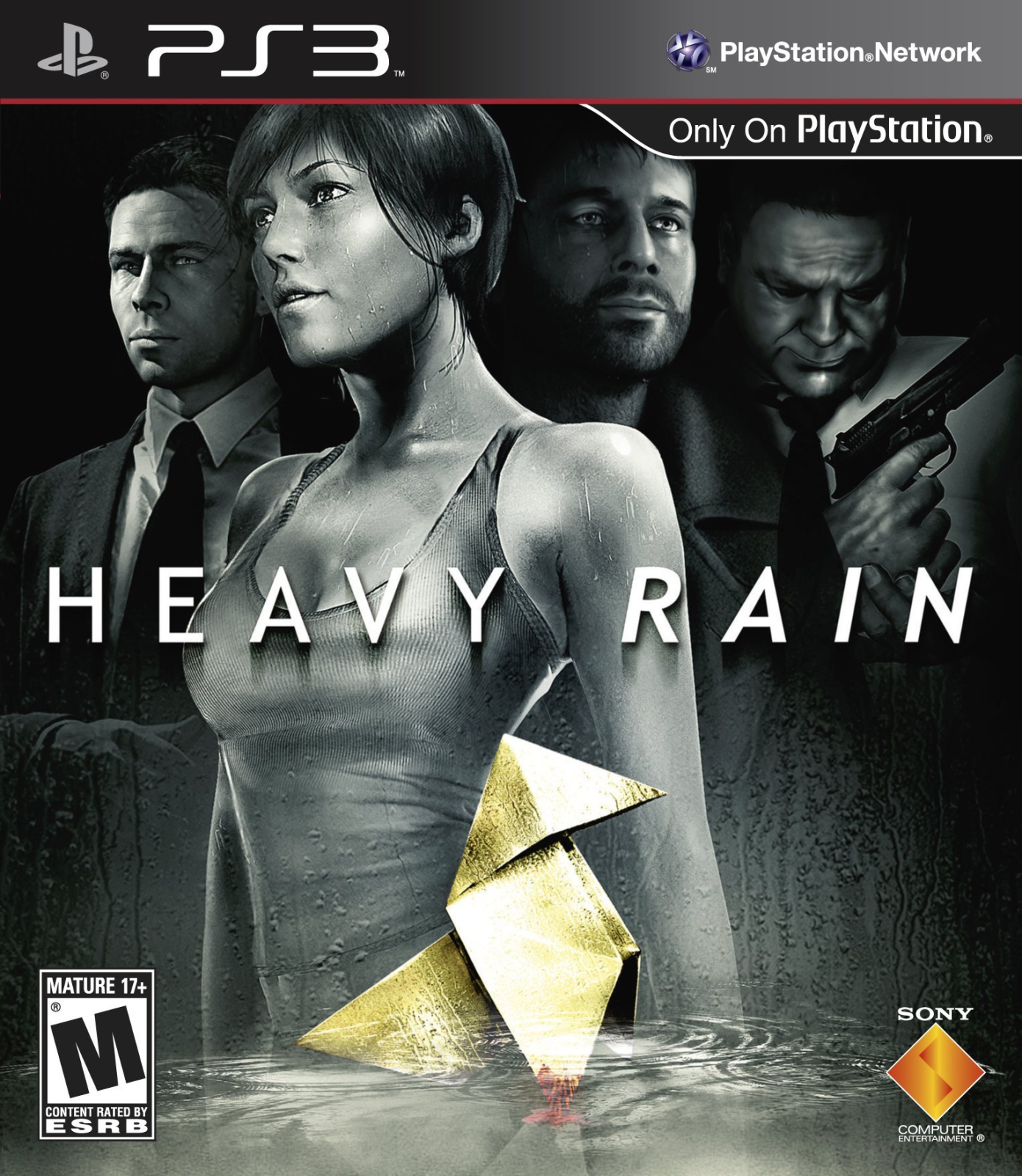
Games As Art: More Thoughts on Heavy Rain

I don't want to continue talking about Heavy Rain at length, I feel like I've done so enough, but I do have a few further thoughts I'd like to share before I let the subject rest.


First of all I think Heavy Rain is a game that will continue to amaze and divide people for years to come. The more of it I experience the more I want to talk about how different it is from other games, and how it truly is a stepping-stone title in the history of gaming. It simply feels different to play this game than any other game or movie that has come before. It may not be the future of gaming in the general sense, but it certainly has refined a single genre almost to the point of becoming unrecognizable. Interactive movies will never be the same, and that is a very good thing. From now on they will be viable, both as entertainment and art.

I haven't stressed enough the degree to which your characters' mortality influences the experience of Heavy Rain. Knowing that at any point you can cause the death of a major character and change the story rather than end it gives weight to every decision in a revolutionary way. Never before have you experienced this kind of influences to this degree, not in video games nor in cinema. You become at once the actor, director, writer and witness of the Heavy Rain story. In this sense every playthrough becomes your story, your adventure. I appreciate having the option to go back to any moment in the story and replay it, but frankly it's insufficient since each section is so influenced by your multitude of actions throughout the whole. It truly is an interactive movie that lives and breathes with us, and thereby comes to mean so much more both in terms of individual characters and overal arc.


On the subject of meaningful characters, I want to also mention Heavy Rain's gender politics. They are without a doubt problematic, and not quite as forward looking as I once hoped. The first few minutes of gameplay as the female player-character, Madison, are voyeuristic in the extreme: not only can you have her undress and shower, there is actually a set of available commands that have no effect beyond making her stretch and push out her chest. Nevertheless, the game is still an improvement upon general representations of gender within the video game industry.

Take for example the strip sequence I mentioned in my ramble in October: in the 'Sexy Girl' chapter players are forced (at gun-point) to strip for a sleazy club owner. The sequence not only puts players in the awkward position of identifying with the expressly uncomfortable Madison, it furthermore allows them to control her degradation. If the player is able to completely ignore Madison's personality despite hearing her inner thoughts, then they can choose to prolong the scene in order to see more of her body exposed. Doing so is a conscious choice, however, as the conclusion to the sequence is put within reach early on: if the player decides to have Madison to strip further then they are in effect taking the subject position of the club owner who is forcing her to do so; the controller becomes the gun, and the player becomes the perverted rapist. This is a unique moment in gaming where the voyeuristic act is being called out for what it is in terms of the commodifying nature of single-player virtual portrayals of sex. As in all other facets, the game has its problems but they shy in comparison to the stature of its accomplishments.


Anyway, those are just a few more thoughts I've had about Heavy Rain. It continues to be an incredible experience, more so every time I return to it, and I strongly recommend it to everyone. I'll leave you now with a few other thoughts on the game that I've found interesting:

The Brainy Gamer decries Heavy Rain's half-hearted interactivity, and then opens up the conversation for dissenting viewpoints.

One such dissenting viewpoint is expressed at Pop Matters.

A fantastic Contrarian Corner piece on the game over at IGN. This article really explores the game as an interactive entertainment vehicle, and attacks its gender politics in ways that do not align with my assessment above.

A breakdown of the game's admittedly significant plot holes over at games radar. Spoiler warning. This article is the best proof that Heavy Rain is truly more game than movie, and an experience that must be played in order to be felt.

Lastly, the reviews from Joystiq, Kotaku, and GameTrailers that finally convinced me to buy the game.

Saturday, March 6, 2010

Discussion of Race in Video Games at DICE 2010

The video below shows Raven Software's Manveer Heir hosting a panel discussion on the representation of race in video games. It's well worth the time, despite the fact that it's difficult/impossible to see some/many of the charts in the background.


Wednesday, February 3, 2010

On this whole 'National Post' debacle...


For those who haven't heard, on January 26 the National Post put out an editorial decrying Women's Studies. The piece is a response to news of the 'death' of the program at institutions around the country. The NP editors discuss how the academic field is not disappearing from schools but is rather "being renamed to make [it] appear less controversial." The article then outlines the ways in which Women's Studies has purportedly damaged society since its inception in the late 1970s.

Wednesday, January 27, 2010

Thoughts on Avatar Part 2: The Issue of Race


Alright, time for another piece on James Cameron's Avatar. My first post focused on the use and potential of the 3D technology used in the film. This time I want to talk about the racial politics of the film, specifically the problematic depiction of the Other and the purported critique of colonialism.

Tuesday, January 26, 2010

From Around The Web - 1/26/10

If I had been Errol Morris I probably would have shit my pants when I got this message in writing on official Miramax letterhead. Harvey Weinstein is clearly a corporate badass, and would most likely eat me.

Why hire a real secretary when you could just buy an iLane? All the benefits without the hassle of having to deal with a real, live woman!

I just learned the sad news that The Big Bop is closing. For all those who don't live in Toronto, this was a rock club that featured all ages shows. I spent a large proportion of my youth there and it's sad to see it go.

Ok, so I lied. There was at least one awesome thing about Youth In Revolt: it introduced me to this song

Thursday, October 29, 2009

Thoughts on Sexuality in Video Games


Last night my girlfriend linked me to an article discussing sexual relationships in video games that Alex Raymond posted on GameCritics.com back in August. Apparently the link just recently popped up over on Feministing (On a tangentially related subject, if anyone has any suggestions for feminist oriented/leaning blogs that are better than Feministing, we're all ears). I know that Rayond's article is a bit stale but it’s an interesting issue that is definitely still relevant to the medium as a whole. I started to write a response and it snowballed on me until it suddenly became this post.