Showing posts with label heavy rain. Show all posts

Monday, March 12, 2012

Quantic Dream's Incredible "Kara" Tech Demo from GDC

In case you missed it, below is the amazing "Kara" tech demo that Quantic Dream's David Cage (of Heavy Rain fame) showed off at last week's Game Developers Conference 2012. It's an outstanding display of the PS3's power and a short but interesting exploration of the nature of artificial intelligence. But don't take my word for it, check out the video below:


What an incredible video. In a scant seven minutes the "Kara" figure manages to raise complex ideas about the manufacturing of artificial intelligence and the responsibilities of their creators; by extension those same concepts trouble conventional notions about the origins and value of sentient life. These are common science fiction tropes that I for one would be excited to see explored in a video game, and especially one by the likes of David Cage. 

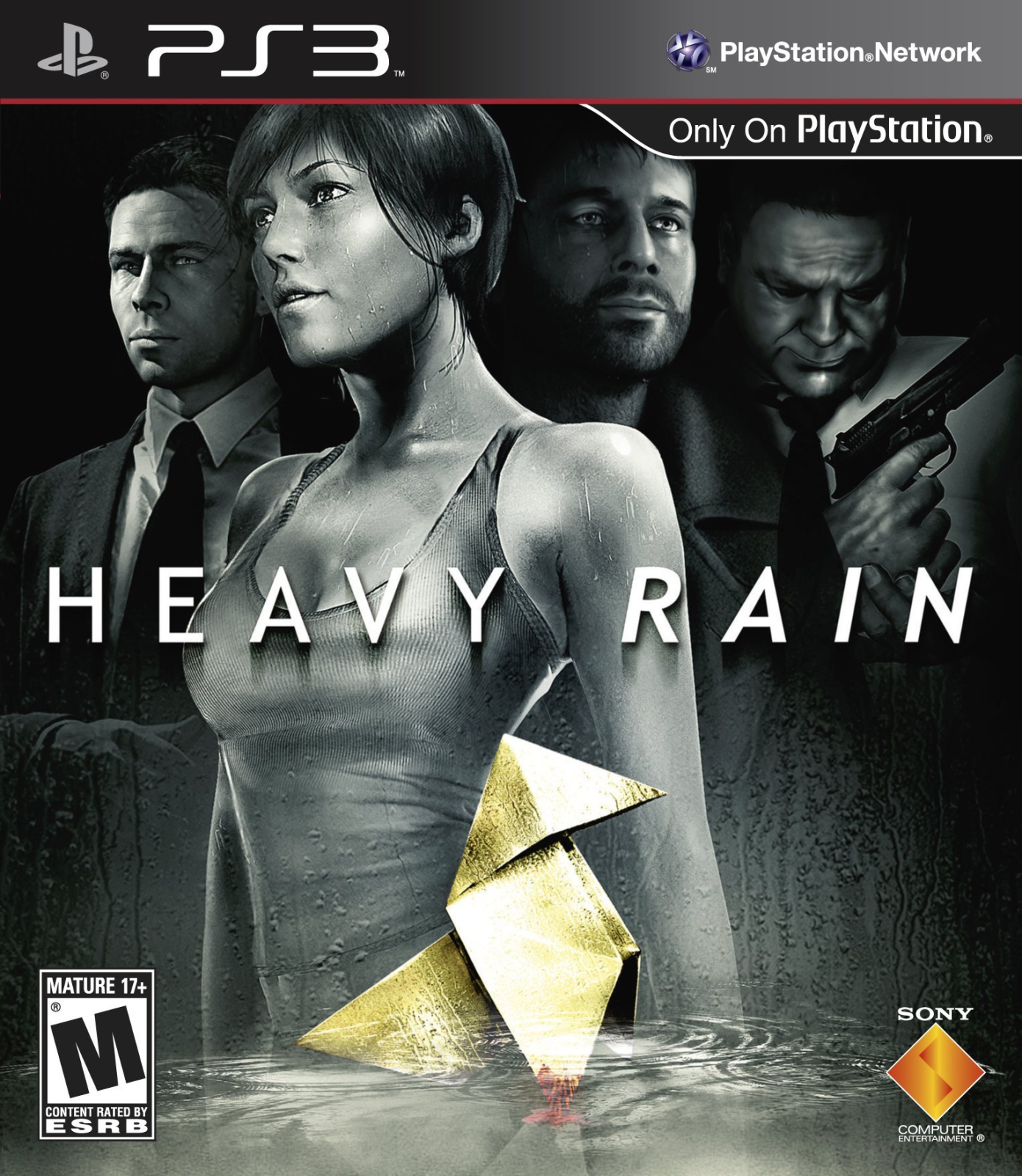
Longtime readers (ha) will recall that I was more than a little excited for Heavy Rain.  Although the game didn't necessarily live up to my expectations, it was nevertheless an interesting and unique experiment for the medium. I'm excited to try out David Cage's next game, whatever it ends up being, and this tech demo has increased my curiosity about what that project will explore. If nothing else it shows that he is building upon the foundations he laid in Heavy Rain, both in terms of continuing that game's technological/graphical developments and also improving on its shortcomings. 

One of the most resounding criticisms of Heavy Rain was the fact that it was set in America but voiced (poorly) by French actors, thereby completely breaking any senses of immersion or tension. This demo clearly shows that Cage has heard those critiques and (hopefully) won't make the same mistake twice. The acting on display in the "Kara" demo is profoundly moving, and the mere idea of a game exactly likeHeavy Rain with that caliber of performance is buzz worthy. And I don't believe for a second that Cage would settle for simply Heavy Rain 2. 

Whatever's coming will be as unique and exciting as Cage's previous game was, and will clearly be building upon its strengths and weaknesses alike. It almost feels stupid to get my hopes up all over again, but this demo has me excited despite myself. Fingers crossed whatever we get from this lives up to its potential.

Wednesday, April 28, 2010

From Around the Web - 4/28/10


Coolest thing I've seen all day: a flash recreation of the original Super Mario Bros that lets you play as Megaman, Link, Samus, or the dude from Contra. Pictured above, check it out on Newgrounds.

A new interview with Ridley Scott suddenly makes me VERY excited about his upcoming Alien prequel(s). Engineers of space? Hells yes!

An exploration of race in Heavy Rain on a sweet blog I stumbled upon called Experience Points.

ScreenRant's annual summer movies trailer has been released and is embeded below:

Thursday, April 22, 2010

Games As Art: Roger Ebert and Final Words on Heavy Rain


Tunnel vision?

Following the overwhelming response to his dismissal of video games as a potentially artistic medium, Roger Ebert returned to the subject in a recent blog post. After looking into the matter further, his new conclusion is that he was right the first time: video games are not art, and furthermore never will be during the lifetime of anyone currently alive. The response from the gaming community has been pretty vocal, albeit not as universally outraged as last time.

Ebert's latest post is written with the same flippant disregard that has characterized all of his public opinions on video games. His responses to Kellee Sanitago's TED talk are superficial and demonstrate that he has done little-to-no further research beyond watching the online video of said discussion. Besides reiterating his original opinion in the comparative context of cave paintings (which he prefers to video games), he mostly argues the subjective semantics of the term "art." He's open about his bias towards film, but then doesn't give video games a fair chance in light of this, instead referring to the financial structure behind the industry as reason enough to discount it as a potential site of artistic work. As though cinema is not significantly dictated by business models and economics.

In discussing Santiago's examples of artistic games Ebert makes it exceedingly clear that he has not played them. His questions about Flower in particular ("Is the game scored? ... Do you control the flower?") demonstrate a complete lack of familiarity with the game. He hasn't bothered to educate himself in a practical sense and so of course his opinion hasn't changed. In order to understand games one has to play them, as the experience of engaging with the interface is equally important to understanding of the work behind the project or the meaning conveyed therein. Judging a game without playing it would be like saying you've seen a movie after looking at a series of still frames.

In Flower you control, you guessed it, a flower petal blowing in 
the wind and try to spread beauty to your surrounding environment

That's actually a point I was planning to make in the context of Heavy Rain. Having played through the entire game and now gotten some distance from it, I want to return to my earlier points about what the game accomplishes.

I spoke a lot about causality and the freedom that Heavy Rain gives the player to make choices and explore their consequences. Having played through the entire game I can now say that the degree to which the game allows you to make decisions with branching narrative impacts is somewhat less than I initially believed. There are certainly an incredible number of choices to make and different endings to the story they can result in, but some of the most important ones are more clearly indicated and binary than I expected. The story is also severely flawed in ways that have been well-documented online.

Despite all of these criticisms, however, I still contend that Heavy Rain represents a significant artistic achievement in gaming. It has many problems, granted, and in a lot of ways it fails to transcend being an obviously rule-based, linear narrative video game. But all of this is easy to say after-the-fact and says nothing of the actual gaming experience. It is in the engagement with Heavy Rain that the game achieves something that I would call art.

In Heavy Rain there are choices and consequences, 
but none of them are wrong in the traditional sense

Regardless of the flawed narrative or frustrating control scheme, Heavy Rain draws you into the experience in a way that few games can. It is incredibly immersive because while you're playing you really do believe that your actions have serious narrative consequences. You feel the weight of every decision in a simultaneously realistic and dramatic sense, and so every choice is compelling. It's easy to criticize the game once you've explored every option and witnessed firsthand its limitations, but in the act of playing the game it makes you feel and consider your options even as you control your actions. That's only one approach to the question of creating art with a video game, but it is a far cry from the winning or losing binary that Ebert describes.

My point is that the actual playing of games is an integral aspect of the medium, and so any question as to their quality, content, or artistic achievement cannot ignore this facet of the experience. If an interactive medium can force you to question and consider our real world existence in any form then is that not art? Again the debate boils down to subjective semantics, but to me art is that which colours human life by appealing to our senses, thoughts, and emotions. It works upon us through the cognitive faculties that give us our very being. I think Mr. Ebert is wrong in saying that video games cannot achieve this.

I have played games that have affected me, made me pause and reconsider my beliefs. Braid forced me to question my memories and thus myself, while playing Bioshock drove me to think about human nature. Through Heavy Rain I explored the nature of causality and the power of choice. These are meagre artistic accomplishments for what is admittedly an infantile medium, but they are important ones nonetheless. They show that there is potential for great things in interactive entertainment, just as there is potential in all forms of the arts.

The lovely and poignant Braid forces us to question our memories and actions 
by using the flow of time as both a plot point and a game mechanic

That the majority of productions are schlock and the industry is dictated by financial gain is simply not enough reason to discredit what good there is or what good there could be. Video games deserve a chance for recognition and in order for that to happen they have to be considered on their own terms. They need to be given the benefit of the doubt, and above all else they need to be played

The debate as to whether or not games can be art goes on, and likely will continue to for a long time to come. I have made it clear where I stand, and will continue to do so with my Games As Art posts. Now, the debate about whether or not art can be games? That's a whole other story...

Sunday, March 7, 2010

Games As Art: More Thoughts on Heavy Rain

I don't want to continue talking about Heavy Rain at length, I feel like I've done so enough, but I do have a few further thoughts I'd like to share before I let the subject rest.


First of all I think Heavy Rain is a game that will continue to amaze and divide people for years to come. The more of it I experience the more I want to talk about how different it is from other games, and how it truly is a stepping-stone title in the history of gaming. It simply feels different to play this game than any other game or movie that has come before. It may not be the future of gaming in the general sense, but it certainly has refined a single genre almost to the point of becoming unrecognizable. Interactive movies will never be the same, and that is a very good thing. From now on they will be viable, both as entertainment and art.

I haven't stressed enough the degree to which your characters' mortality influences the experience of Heavy Rain. Knowing that at any point you can cause the death of a major character and change the story rather than end it gives weight to every decision in a revolutionary way. Never before have you experienced this kind of influences to this degree, not in video games nor in cinema. You become at once the actor, director, writer and witness of the Heavy Rain story. In this sense every playthrough becomes your story, your adventure. I appreciate having the option to go back to any moment in the story and replay it, but frankly it's insufficient since each section is so influenced by your multitude of actions throughout the whole. It truly is an interactive movie that lives and breathes with us, and thereby comes to mean so much more both in terms of individual characters and overal arc.


On the subject of meaningful characters, I want to also mention Heavy Rain's gender politics. They are without a doubt problematic, and not quite as forward looking as I once hoped. The first few minutes of gameplay as the female player-character, Madison, are voyeuristic in the extreme: not only can you have her undress and shower, there is actually a set of available commands that have no effect beyond making her stretch and push out her chest. Nevertheless, the game is still an improvement upon general representations of gender within the video game industry.

Take for example the strip sequence I mentioned in my ramble in October: in the 'Sexy Girl' chapter players are forced (at gun-point) to strip for a sleazy club owner. The sequence not only puts players in the awkward position of identifying with the expressly uncomfortable Madison, it furthermore allows them to control her degradation. If the player is able to completely ignore Madison's personality despite hearing her inner thoughts, then they can choose to prolong the scene in order to see more of her body exposed. Doing so is a conscious choice, however, as the conclusion to the sequence is put within reach early on: if the player decides to have Madison to strip further then they are in effect taking the subject position of the club owner who is forcing her to do so; the controller becomes the gun, and the player becomes the perverted rapist. This is a unique moment in gaming where the voyeuristic act is being called out for what it is in terms of the commodifying nature of single-player virtual portrayals of sex. As in all other facets, the game has its problems but they shy in comparison to the stature of its accomplishments.


Anyway, those are just a few more thoughts I've had about Heavy Rain. It continues to be an incredible experience, more so every time I return to it, and I strongly recommend it to everyone. I'll leave you now with a few other thoughts on the game that I've found interesting:

The Brainy Gamer decries Heavy Rain's half-hearted interactivity, and then opens up the conversation for dissenting viewpoints.

One such dissenting viewpoint is expressed at Pop Matters.

A fantastic Contrarian Corner piece on the game over at IGN. This article really explores the game as an interactive entertainment vehicle, and attacks its gender politics in ways that do not align with my assessment above.

A breakdown of the game's admittedly significant plot holes over at games radar. Spoiler warning. This article is the best proof that Heavy Rain is truly more game than movie, and an experience that must be played in order to be felt.

Lastly, the reviews from Joystiq, Kotaku, and GameTrailers that finally convinced me to buy the game.

Friday, February 26, 2010

Games As Art: Heavy Rain and Choice


I've been excited about Heavy Rain for a while now. In and of itself that speaks to the nature of my interest in video games.


Interactive entertainment has always appealed to me as a medium for working out mental problems, both simple and complex, in a virtually tangible way. Video games like Super Mario World interest me in a similar way to math problems: both present variables to work with in order to find a predetermined solution. There can be different ways to achieve that end, and perhaps even multiple types of solutions, but regardless the goal is always clear and within reach. The pleasure you derive is from knowing and mastering the methods of success.


As I've grown older, however, I have begun to look for more from my games. Sure, I have enjoyed throwbacks like New Super Mario Bros. Wii as traditional and nostalgic forms of entertainment. But those types of games are not the reason that I finally invested in a Playstation 3.


Increasingly I am intrigued by games that explore new types of play mechanics and new ways of presenting narrative: I spent the better part of a year trying to play Braid in some form, and finally bought it the first day it was available on the Playstation Network; I played through all of Portal in one sitting while staying at a friend's house, and it remains one of the best experiences I have ever had with a video game; and the phenomenal Bioshock never once left my PS3 from start to finish and beyond. Each of these games sought to do something new with video games, whether to problematize and critique common gaming tropes, highlight new ways of considering and utilizing 3-D space, or explore complex philosophical questions through an interactive medium. In their own ways each could be considered art.


Despite my recent glorification of Roger Ebert I do not accept his stated belief that video games are not capable of being art. I think the medium is still in its infancy but that evidence is mounting that shows video games can be used to evoke complex questions about reality and humanity. More than that I think that video games could potentially explore these question more effectively than cinema specifically because of their interactivity: through this virtual entertainment our choices can influence outcomes, and then we can replay them and make different choices. With careful and mature design this method could be used to explore human concepts in a distinctly human way. I believe that the games listed above, along with countless others, show that we are working towards a time and context when this will become reality.


This week Heavy Rain finally hit store shelves, giving further credence to the idea that video games can offer insight on our existence.


Heavy Rain is a new PS3 exclusive from Quantic Dream. It's an interactive movie where you play as four different characters trying to catch a serial killer in an East coast American city. The gameplay consists of exploration and quick-time events (QTEs), or on-screen prompts that ask the player to press a specific button in a limited period of time. This type of interactive movie is one of the oldest genres in gaming, with roots going all the way back to arcade games like Dragon's Lair. What makes Heavy Rain different from all that has come before is in the way the story changes in accordance with your actions.


Dragon's Lair


Typically in a QTE based game you can either succeed or fail at any given event. In older games like the aforementioned Dragon's Lair a failure results in the end of the story, often as a result of your character's death. In more recent uses of the gaming mechanic a failure might simply complicate or delay one's progression through the game, as in the God of War series. Certain games like Shenmue have enabled players to noticeably alter the story through their success or failure at certain QTEs; these games are few and far between, however, and the changes to the overall story have always been fairly limited.


In Heavy Rain the player is able to dramatically alter the arc and outcome of the story through their performance in QTEs. There are numerous possible endings to the game, and the player's every action plays a role in determining their story arc. Any of the four playable characters can die in certain scenarios, but if this happens the game continues on regardless; the player simply loses that thread of the narrative and the story changes to incorporate the death. This not only gives greater weight to each action but also greater reason for multiple playthroughs, as each experience of the game has the potential to be dramatically different.


A QTE prompting the player to press the circle button


Quantic Dream's greatest achievement, however, is the way in which Heavy Rain incorporates choice as a gameplay element.


The game presents players with thousands of QTEs, many of which are passed or failed with diverging narrative consequences. There are also some instances in which the player is given the option to take an action but where the necessity or desirability of doing so is left ambiguous. Here the player is able to influence the direction of the story with their own choices as opposed to merely their competence at timed button prompts. 


There are already many great examples of video games that explore causality in human existence, but two stand out in particular: Bioshock and Mass Effect 2. 


Ken Levine's Bioshock explores the nature of choice in video games by addressing the fact that the medium doesn't typically offer much. Spoiler warning ahead. The game consists of a series of objectives that are given to you by a disembodied voice over you radio. They are all tied into the game diegetically through a well-structured narrative, but any regular player recognizes them as the prompts that typify video game structure. One completes specified actions in order to continue progress. The end of Bioshock, however, addresses this by revealing the player to be a mind-controlled goon: the objectives necessary to continue the game were all given to the player within the narrative, but it is revealed that the character was influenced in such a way as to make him incapable of acting differently. 


Bioshock


The video game structure that inhibits the player is suddenly exposed within the narrative as a way of critiquing the blind-faith that the player is guilty of. As one character dramatically insists, "A man chooses" (emphasis added), and evidently the player's character and thus the player do not. This exploration of choice in video games is simultaneously an excellent critique of the medium and a deeply resonant philosophical issue. Ironically it does not leave the player with much in the way of choice on the matter.


Mass Effect 2, on the other hand, allows players to import their character data from its predecessor in order to continue the character story they have already begun. More than that, though, the choices they made in Mass Effect are also imported to the sequel, completely reshaping the experience of the second game into a huge extension of the first. As Rus McLaughlin puts it in an article on IGN, "I wrote my Mass Effect 2 by playing Mass Effect 1. Similarly, I'm writing Mass Effect 3 right now [by playing Mass Effect 2]." 


Mass Effect


The story of the two games is huge, and will be built upon by the third entry in the series. The player's actions from the very beginning greatly influence the direction the story will take, but this is largely relegated to branching dialogue and allegiances. The player is tasked with deciding what to say in order to achieve the desired reaction, and their choices take the story down various branches towards endings that are yet to be determined. Mass Effect 3 will show how the grand space-opera concludes, and the player's actions will greatly determine the ending they receive. 


This concept of choice and consequence is explored quite differently in Heavy Rain. While the Mass Effect series allows gamers to experience the ever-proliferating effects of their branching choices on a massive scale (wonder where they got that name), Heavy Rain explores the concept in a more intimate and human way. Heavy Rain presents choices that are ambiguous in their necessity and effect, and none of them are wrong. While each decision in Mass Effect carries the story forward in a specific way, Heavy Rain tasks players with deciding not only which choices to make but also with which not to. Choosing to place one's hand on another's shoulder might feel at one moment like a show of support, but an instant later seem like a sexual advance. The key is in determining which moment is when, and choosing how to act accordingly. Heavy Rain presents players with the ability to make decisions that are not 'wrong' in a black versus white opposition, but may be undesirable or unnecessary or ill-timed. In this sense it captures an essential human element in the concept of choice.


When I played the Heavy Rain demo I had an admittedly lukewarm reaction to the core game mechanics. They simply aren't that fun. But this game is not about the playing in an input-effect sense, which is the best the demo can offer. It is rather about the idea and sentiment of playing through the story and making it your own through your choices. I read extensively about Heavy Rain and eagerly anticipated its release, and now that I own it I can acknowledge both its promise and its flaws. More than that I see what it is trying to do and how this is a unique moment in gaming.


In contrast to games like Mass Effect, which examine branching consequences, or Bioshock, which muse upon the objective-based nature of video games, Heavy Rain explores the nature of human choices. In every playthrough it forces the player to consider the reasoning behind their every action and the potential consequences. More than that it encourages them see them through to the diverging conclusions, and shows how the smallest choices can have dramatic effects. Cinema has shown us countless stories about human beings act in ways that speak to our everyday lives. Now Heavy Rain is enabling players to influence, consider, and explore those decisions to their full effect. Admittedly it's a programmed medium with predetermined constraints, but then so is film, and to a far greater degree. For the first time the human element of choice has been represented in such a way as to really speak to the characters and the viewer in the same instant.


Heavy Rain shows further evidence that video games can be art, but also does so in a way that we have never before experienced. I hope that people like Roger Ebert will give this game, and all others, the benefit of a doubt before they disqualify the entire medium from aspiring to artistic merit. We are in the twilight hours of video games' dawning as a site for real exploration of human issues and concerns. Even now there are companies willing to provide the financial support necessary for games like Heavy Rain to exist, a risky business move to be sure. For that we should be thankful, and hope that it gets played as much as it deserves.

Monday, February 15, 2010

From Around The Web - 2/15/10

An interesting and informative explanation of How 3-D Works. [Link Broken]

Another piece on Dollhouse. I need more time to think about this show before I do my own write up on it.

Norwegians are hilarious. Also, Google Street View truly is a worldwide phenomenon that is distinctly of our time.

I'm going to pick up Heavy Rain on my way home, based on these reviews, and you can be sure I'll be writing about it soon...

I'm thinking about moving away from Blogger based on recent reports of their... inflexibility... If any of you have thoughts on the matter then please let me know.

Thursday, October 29, 2009

Thoughts on Sexuality in Video Games


Last night my girlfriend linked me to an article discussing sexual relationships in video games that Alex Raymond posted on GameCritics.com back in August. Apparently the link just recently popped up over on Feministing (On a tangentially related subject, if anyone has any suggestions for feminist oriented/leaning blogs that are better than Feministing, we're all ears). I know that Rayond's article is a bit stale but it’s an interesting issue that is definitely still relevant to the medium as a whole. I started to write a response and it snowballed on me until it suddenly became this post.